




Blog Article
Is the timeline an endless lure? Why a Facebook page isn't enough
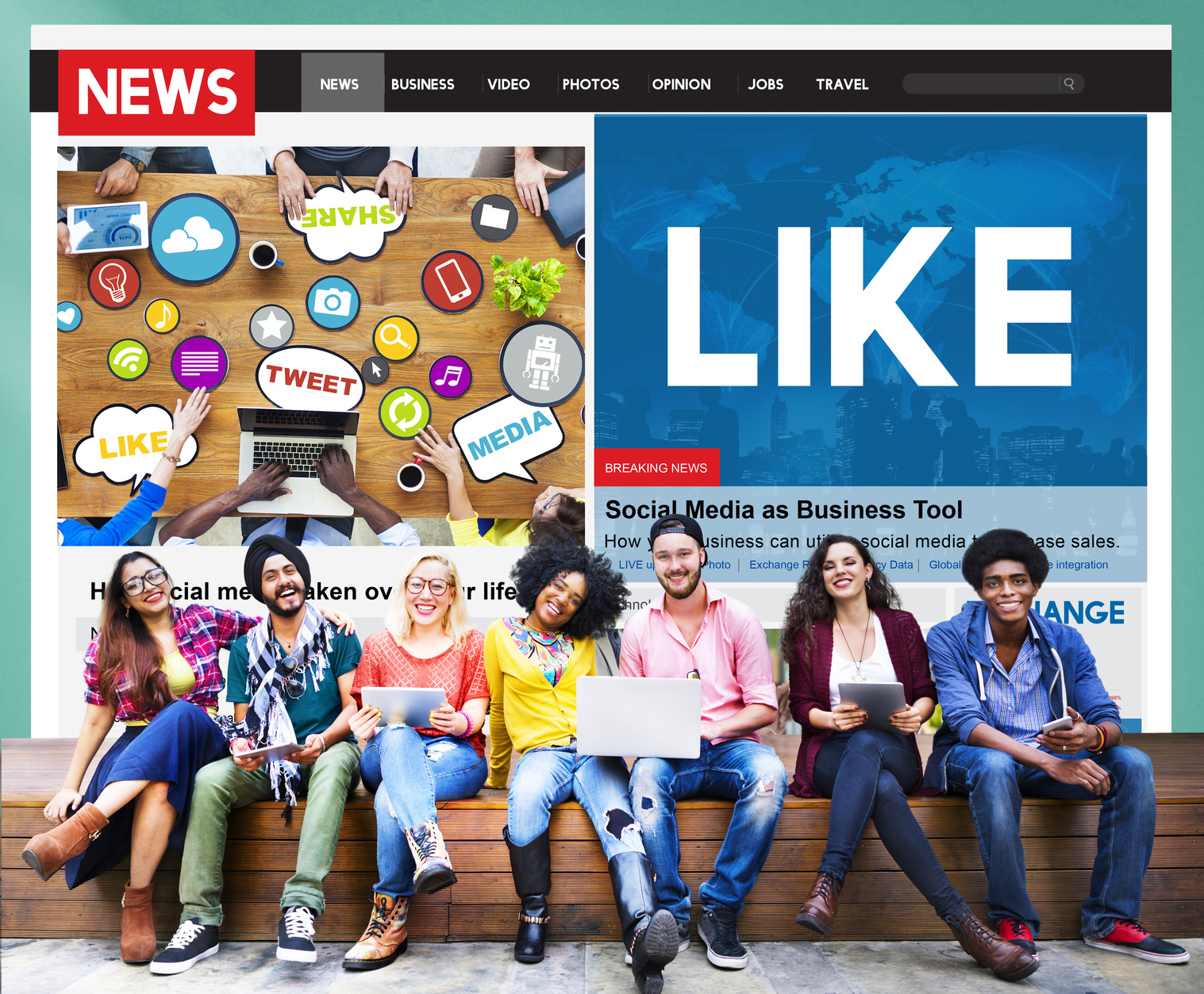
Whether you're a business owner or a private individual, there's no getting around Facebook. The platform is ubiquitous and present in every situation—and, incidentally, it's popular with both supporters and critics alike.
For a modern and forward-thinking company, it is indeed unthinkable today to operate without its own Facebook page. According to Statista, 93% of all companies use this social media channel—worldwide! But: 76% of all companies also use Twitter, 67% LinkedIn, 53% YouTube, and a full 49% Google+. [1]
Nevertheless, some make the big mistake of focusing so much on Facebook that they neglect everything else: Who cares about the possibly already neglected online presence of their own company website, the Instagram account, or the newsletter?
Everyone’s on Facebook anyway, so why not just ditch all that useless baggage? Facebook—and that’s it for online customer communication? The visitor numbers usually seem to prove you right. But only at first glance.
Many a savvy entrepreneur has already made this costly mistake and brought ruin upon themselves. Especially if they equated their Facebook presence with digitalization.
Online Communication: Multichanneling—and Part of the Bigger Picture
Just like a company’s Facebook fan page, your own website, Twitter account, or perhaps even your own app is an important component of your company’s marketing mix. And it is precisely this mix that is crucial.
In the following paragraphs, I’d like to present some arguments and benefits that support this multi-channel approach as the right one—and that you should by no means overlook. Don’t shy away from the potential extra effort: in the end, it will be worth it for you.
Point 1: The Perceived Dependency
If you focus on just one channel, dependencies—usually not immediately visible—arise with the respective provider, in this case Facebook. Such exclusive ties make you unnecessarily vulnerable and should not be entered into for this reason alone.
With Facebook, of course, there is the added factor that it is an independent company pursuing its own internal goals. Unlike your own website, your company or fan page thus has a different status here.
Furthermore, most companies must realize that they cannot reach their supposedly acquired fans without using an advertising budget. Initially, the platform operator does support the growth of your reach.
Over time, however, your fans’ engagement will wane, and setting up an advertising account will become necessary. Of course, this is in the interest of the global player; this approach is as profit-driven as it is legitimate.
In addition to the advantageous, target-group-specific outreach you can achieve through Facebook, you as an entrepreneur should always be mindful of this aspect. Therefore, direct your acquired customers to your other online presences and channels whenever possible to encourage them, for example, to subscribe to your newsletter or install mobile apps. This strengthens your overall presence and also allows you to implement more cost-effective advertising measures.
Point 2: Extensive combinability
Once you’ve built up a range of digital platforms—such as an app, a website, and, of course, a Facebook page—and established these channels, you can link them together wonderfully: For example, you can reach visitors to your app or website indirectly and effortlessly via Facebook with minimal effort. At the same time, you can, of course, use an advertising budget to precisely target potential customers with your own offerings.
Combine the design-related freedom of choice in your content across all other channels with Facebook. This allows you to present your products in a sufficient and appealing light. The average Facebook user isn’t firmly tied to the platform anyway and is happy to switch perspectives—especially when presented with something visually appealing.
Point 3: Multi-Channel and Multiple Options
This brings us to the third point of our discussion: What a Facebook page cannot do is be individually customized to your business processes. Depending on the system used, everything in the form of a website can be adapted to your needs in just a few steps and tailored to customer acquisition or business development. This allows you to sell products online, take appointment reservations, display valuable information about your products, offer additional services, and thus encourage recommendations.
The points mentioned above should already give you a good idea of the necessity for a broad media presence for your company. The key across all channels is that you not only act but also react: Engage in dialogue with your customers whenever possible, let them participate and help shape the experience. This creates loyalty and genuine added value. Across all channels.
And by “all,” I truly mean all—because today, we must not and should not lose sight of the analog, traditional channels. Depending on the target audience, message, product, or overall concept, analog measures can provide the crucial counterbalance to your digital strategies—and inspire enthusiasm.
If you know of other channels and best practices regarding multichannel and social media strategies, we look forward to your feedback. Just send us a comment or an email!
[1] https://de.statista.com/statistik/daten/studie/71251/umfrage/einsatz-von-social-media-durch-unternehmen/